Impossible Tasks

“He answered and said unto them, Give ye them to eat…”—Mark 6:37a.

Has anyone ever asked you to do something that seems totally ridiculous? The very suggestion of their instruction may have brought laughter or even anger for proposing the idea.

I imagine that the disciples may have felt this way when Jesus responded with this comment when they asked him how they were going to feed the 5000, who had stayed around to hear him speak. The disciples suggested a logical answer to the problem, “Send them away, that they may go into the country round about, and into the villages, and buy themselves bread: for they have nothing to eat.”—Mark 6:36.

That wasn’t the answer Jesus wanted. He saw the need of the people. He had compassion on them. He wanted to solve the problem with a Kingdom response, not logic. He asked them what they had in their hand.

So often what we already have in our hand is what Jesus wants us to use to solve our problems. We must add faith to what we already have in our hand. Then we will see the gospel of the Kingdom manifested to solve problems in a supernatural way. Jesus wanted to meet a need in which God would receive the glory. Sending the people away did not meet the need, nor did it bring glory to the Father.

Do not settle for the gospel of salvation only. Jesus came that we might experience the gospel of the Kingdom in its fullest sense. Our job is to look past our logical reasoning and see how God might want to solve our problem in a supernatural way.


Being a Person Under Authority

“. . .When Jesus heard it, he marvelled, and said to them that followed, Verily I say unto you, I have not found so great faith, no, not in Israel.”—Matthew 8:10b.

The centurion came to Jesus and told Him of his servant who was paralyzed and in terrible suffering. He came to Jesus because he believed He could heal him. He told Jesus of the matter, and Jesus was willing to come with the centurion. But the centurion would not have it. He knew that Jesus, being under the authority of Heaven itself, did not have to see the servant to help him. The centurion understood authority. He understood that he himself had certain rights that his position granted him to have power over situations and people. He also was a man under authority. The centurion understood Jesus’ position and what power that position held in Heaven—the power to heal his servant if He chose to exercise that authority.

When Jesus saw that the centurion understood this principle of authority and that He did not have to visit the servant to heal him, He acknowledged the centurion’s faith. Jesus knew it took great faith to understand authority and whether He had the authority to do what was being asked.

God has placed a system of authority in our world that requires faith to operate under its boundaries: fathers over sons and daughters, employers over employees, civil authorities over the people, church leaders over church members. These are authority structures God has placed in our lives to protect and guide us to His will. Some confuse position with worthiness or qualifications of that position. It is the position that God works through. The fact that an authority may not be a Christian may have no bearing on whether God can work through him as your authority. It is only when that authority counsels against a biblical mandate that we should not follow that person’s guidance. The hand of the king is in the hand of God.

Today, we find few who understand this system of authority God has ordained. It requires great faith to operate in this realm. Yet Jesus said that when we understand this, we demonstrate the kind of faith that He rarely sees.

Be a person of rare faith. See the authorities placed in your life as those God is using to protect you.

Getting Refueled

“And in the morning, rising up a great while before day, he went out, and departed into a solitary place, and there prayed.”—Mark 1:35-36.

How do you get refueled? When our cars run low on fuel, we simply drop by the local filling station to get more fuel. When our bodies are hungry, we feed them. How do we refuel our spiritual lives? We can learn from the example Jesus modeled in His life.

In the New Testament we see that Jesus had a very demanding schedule. He traveled from town to town, often walking many miles between the towns. He spent a lot of time with people. As a Pastor and Teacher I can tell you that it is very draining to minister for extended periods. Your body and your soul becomes fatigued.

The day before the above scripture was recorded, Jesus had a full day of ministry healing the sick, delivering people from demons and walking to different cities (Mark 1:29-37). The following day it says Jesus got up before the sun rose and went to pray. The disciples were wondering where He was.

When Jesus was on earth, He was fully man. Everything He did was based upon receiving specific directions and power from His father to do them. He was not operating as God, but as a human being with the same limitations you and I have. So, Jesus knew one of the key ways to refuel His body and soul was by spending time in prayer to His Heavenly Father.

This is a critical discipline for every follower of Jesus if you expect to have power and victory in your Christian walk. We each need to find a solitary place to focus upon the Lord, His Word and His input for our lives.

If this is not a part of your daily experience, why not start today with a few minutes of focused time of reading and prayer. You will be encouraged with the new spiritual focus you will have by making this a priority.

Where Do You Place your Confidence?

“And Satan stood up against Israel, and provoked David to number Israel. 2 And David said to Joab and to the rulers of the people, Go, number Israel from Beersheba even to Dan; and bring the number of them to me, that I may know it.”—1 Chronicles 21:1-2.

God always requires total trust in Him alone for our victories in life. Throughout scripture we are cautioned not to place our trust in the strength of horses, other men or our own abilities. David’s decision to take a census was a failure to keep his trust totally upon the Lord.

David’s purpose in counting his population was to assess his military strength, much like the second census taken under Moses (Numbers 1:2-3). David found 800,000 men eligible for military service in Israel and 500,000 men in Judah (2 Samuel 24:9), more than double the previous head count.

David’s commander evidently recognized the grave error that his king was about to make. “But Joab replied, ‘May the LORD multiply his troops a hundred times over. My lord the king, are they not all my lord’s subjects? Why does my lord want to do this? Why should he bring guilt on Israel?'”—1 Chronicles 21:3.

This census displeased the Lord. David was falling into the temptation of trusting in the size of his army rather than in the Lord. God punished David and reduced his forces by bringing a plague that killed 70,000 men (1 Chronicles 21:14-15). How do we do this in our lives today? We trust our bank accounts, our skills, and the security of our workplace. When we begin placing our faith in these things instead of the provider of these things we get into trouble with God.

What a lesson this is for each of us. Today, place your total trust in the Lord for all of your needs.

The Dangers of Over-Control

“For rebellion is as the sin of witchcraft, and stubbornness is as iniquity and idolatry. Because thou hast rejected the word of the LORD, he hath also rejected thee from being king.”—1 Samuel 15:23.

I heard a pilot say: “Whenever a jet goes out of control and begins to spin, the only thing to do is totally take your hands off the controls and the plane will right itself.” This goes against our natural inclination to control and manipulate in order to bring things back under control. It is scary to be out of control. Or is it?

Saul was a man out of control. He was losing control of his kingdom to David. He was losing the favor of God and the people. It began as compromises. Eventually he was given a final test to obey the voice of God fully. He was instructed to kill the Amalekites completely; but he failed to follow through. The prophet Samuel delivered a hard word to King Saul, “Because you have rejected the word of the Lord, He has rejected you as king”—1 Samuel 15:26. Saul obeyed partially, but not fully. It was partial obedience that led to his removal as king of Israel and his calling from God. But why did Saul do such a thing? “I was afraid of the people and so I gave in to them”—Samuel 15:24b. Saul’s fear and insecurity made him more afraid of the people and what they thought than of God. At the core of Saul’s disobedience was fear of losing control. That fear of losing control led to partial obedience and the loss of his reign as king.

How many of us are in danger of losing God’s blessing due to partial obedience? How many of us have such a need to control people and circumstances that we fail to fully walk in obedience to God’s voice in our lives? Saul provides a great lesson for us as believers. The need to over-control things around us can prevent us from receiving all that God has for us. Today, take an inventory of your control quotient.

Ask God if you are being fully obedient to what He has called you to do this day, and avoid being put on the shelf for disobedience. “To obey is better than sacrifice, and to heed is better than the fat of rams”—1
Samuel 15:22b.

Good Things Versus God-Things

“For (or because) as many as are led by the Spirit of God, they are the sons of God.”—Romans 8:14.

The greatest sign that you and I are maturing in our walk with God is when we can discern the difference between “good things” and “God-things.” When the people of Israel journeyed out of Egypt through the desert, the cloud led them by day. They could move only as fast as the cloud. If they went ahead, they went without God’s presence. If they lagged behind, they also lost God’s presence.

Each of us must have the discernment to know when God is leading in a matter, or if it is simply a good idea. There are so many things in which you and I can be involved, and the more successful you become, the greater the temptations to enter into things where God has not called you. Movers and shakers are especially prone to see all the opportunities.

I recall one time when I entered into a particular project (teaching series) that I thought was a great idea. It would help many people. After three weeks, the project had to be discontinued. It was a great lesson on
understanding what projects have God’s blessing on them. There are some projects you and I might get involved in that result in little fruit compared to the investment put into them. That is because they may never have been birthed by the Holy Spirit.

As sons of God, we are called to be led by the Spirit. This requires a level of dependence on God in which many of us really do not want to invest. It requires listening, waiting, and moving only when God’s Spirit tells us to move. True disciples are “action” people. We know how to get things done, but our greatest strength can be our greatest weakness.

Today, ask God to make you a Romans 8:14 man or woman who is led by the Spirit of God. Pray against lagging behind or moving ahead. Ask God to reveal whether the next project you consider is a “good thing” or a “God-thing.”

Going Beyond Your Paradigm

“So Saul went to Naioth at Ramah. But the Spirit of God came even upon him, and he walked along prophesying until he came to Naioth. He stripped off his robes and also prophesied in Samuel’s presence. He lay that way all that day and night. This is why people say, ‘Is Saul also among the prophets?'”—1 Samuel 19:23-24.

Whenever God calls you into a new thing, you can expect to do things you’ve never done. Saul had just been anointed to be the first king of Israel. He was being launched into a whole new calling. He was hanging out with the spiritual leaders of the nation.

As Saul began to prophesy the prophets wondered if he, too, was a prophet. He was not a prophet but God was doing a new thing through Saul – activating something in him that had been dormant until then.

When God calls you into a new endeavor you will find that God will often anoint you in areas you considered your weakest traits. God turns shepherds like Moses into leaders of nations. He turns farmers like Gideon into reformers. He turns impetuous and unstable personalities like Peter into leaders that can transform a culture and lead a movement.

Whenever God does a new thing in a life, those who knew them before notice the change. Quiet people become bold. Poor speakers learn to become great communicators. Those who were never leaders before become the new leaders. This is the way of God.

When God looks at an individual, He looks at their future, not their past. He is always looking at the person He has created you to become, not the person you are now. When Samuel anointed the young shepherd boy, David, to be the next king of Israel, it would be years before this would happen. However, God already knew who he was to become.

How does God view your life? What is the destiny He has chosen you to fulfill?

Faith and Experiences

“The Son of God, who loved me, and gave Himself for me.”—Galatians 2:20.

We have to battle through our moods into absolute devotion to the Lord Jesus, to get out of the hole-and-corner business of our experience into abandoned devotion to Him. Think Who the New Covenant says that Jesus Christ is, and then think of the despicable meanness of the miserable faith we have—I haven’t had this and that experience! Think what faith in Jesus Christ claims—that He can present us faultless before the throne of God, unutterable pure, absolutely rectified and profoundly justified.

Stand in implicit adoring faith in Him, He is made unto us “wisdom, and righteousness, and sanctification, and redemption.” How can we talk of making a sacrifice for the Son of God! Our salvation is from hell and perdition, and then we talk about making sacrifices!

We have to get out into faith in Jesus Christ continually; not a prayer meeting Jesus Christ, nor a book Jesus Christ, but the New Covenant Jesus Christ, Who is God Incarnate, and Who ought to strike us to His feet as dead. Our faith must be in the One from Whom our experience springs. Jesus Christ wants our absolute abandon of devotion to Himself. We can never EXPERIENCE Jesus Christ, nor ever hold Him within the compass of our own hearts, but our faith must be built in strong emphatic confidence in Him.

It is along this line that we see the rugged impatience of the Holy Ghost against unbelief. All our fears are wicked, and we fear because we will not nourish ourselves in our faith. How can anyone who is identified with Jesus Christ suffer from doubt or fear? It ought to be an absolute paean of perfectly irrepressible, triumphant belief.

One Body

“For as the body is one, and hath many members, and all the members of that one body, being many, are one body: so also is Christ. 13 For by one Spirit are we all baptized into one body, whether we be Jews or Gentiles, whether we be bond or free; and have been all made to drink into one Spirit.”—1 Corinthians 12:12-13.

Imagine with me for a moment that you have won a very expensive car. However, in order to receive your prize, you must agree to an unusual requirement. You must agree to remove one major component in that car in order to receive the gift.

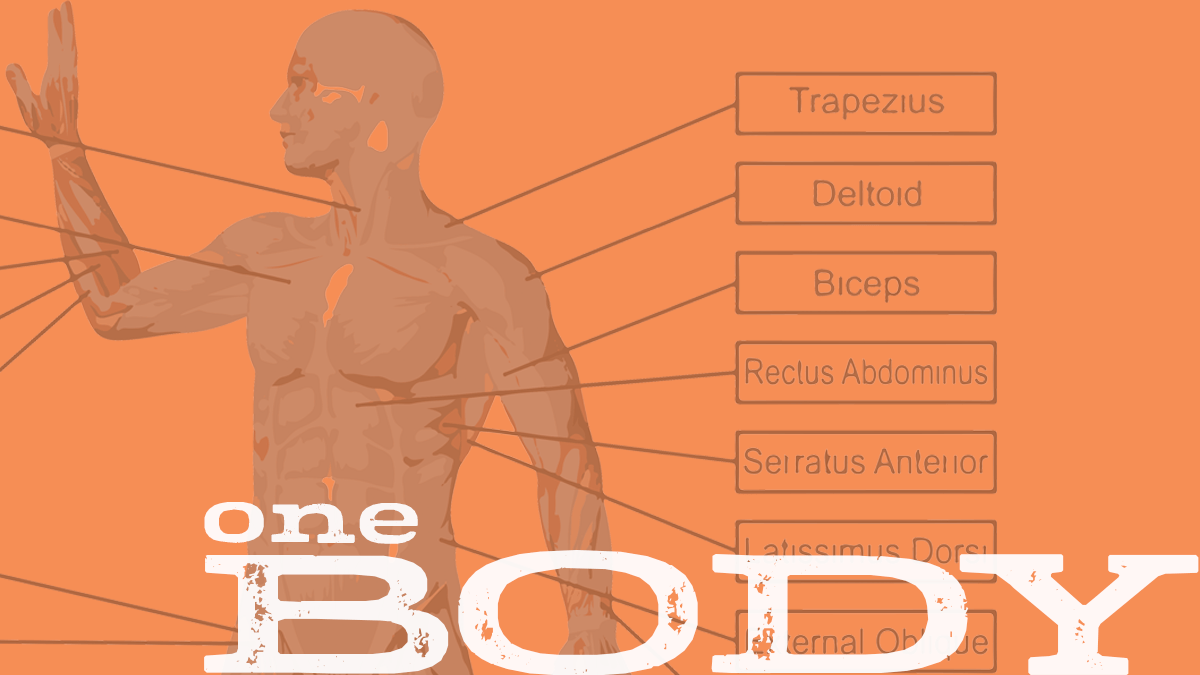
Which component will you remove? Will it be the steering wheel? Perhaps it will be the left front tire or the front seat or the two headlights. My illustration may seem ridiculous, but you get the point. Unless you have the complete car and have the ability to use all of its components, your ability to benefit from that car is going to be severely limited. The Bible says you and I are part of a larger Body – the Body of Christ. We each have our own body, but we are also made up of a larger Body that has a unique function to play. When you are not functioning as God intended, the entire Body suffers because you are not fulfilling your prescribed function.

When you function in a way that is not directly connected to the larger Body, you are only fulfilling a small portion of why the Manufacturer made you. There is a greater mission that you must fulfill. Today, the Body of Christ is fragmented and seeks to do things separated from one another. Our individual church “silos” stands alone – often as monuments to man instead of the greater mission of reaching our world.

Jesus knew the key to fulfilling His mission was getting His larger Body to work as one. “Neither pray I for these alone, but for them also which shall believe on me through their word; 21 That they all may be one; as thou, Father, art in me, and I in thee, that they also may be one in us: that the world may believe that thou hast sent me.”—John 17:20-21.

What is your part in the overall mission? Are you fulfilling your prescribed function as designed by the Manufacturer?

Block Logic

“For thus saith the LORD of hosts, the God of Israel; Houses and fields and vineyards shall be possessed again in this land.”—Jeremiah 32:15.

In the scriptures we discover a difference in the way the Hebrew mind viewed things compared to the way many Westerners relate to God. Hebrews used something called Block Logic. That is, concepts were expressed in self-contained units or blocks of thought. These blocks did not necessarily fit together in any obvious rational or harmonious pattern.

Greek logic, which has influenced the Western world, was different. The Greeks often used tightly contained step logic which reason a premise to a conclusion, each step linked tightly to the next in coherent, rational, logical fashion.

This is why some Bible stories don’t make sense to the western mind. It is particularly difficult for Westerners (those whose thought-patterns have been influenced more by the Greeks and Romans than by the Hebrews) to piece together the block logic of Scripture.

Consider Jeremiah and God’s instruction to purchase land in a seemingly inopportune time. If I asked you to purchase a specific land parcel when you knew that the country you were living in was about to be invaded and you were sure to be placed under arrest, how wise do you believe such an investment would be? Do you believe God would lead you to make such an investment? That is exactly what God told Jeremiah to do. However, God had a good reason for having Jeremiah make such a purchase. It was to be a testimony and a promise that God was going to restore the Jews to their land.

Hebrews made decisions based on obedience. Greeks (and Westerners) often made decisions on logic and reason. If the early church made decisions based on a pro and con method of decision-making, there would be no miracles in the Bible. i.e., such as getting the coin from the fish’s mouth, walking around the walls of Jericho to take the city, Peter walking on water, etc.

We are not to question God’s instructions. We are simply to obey.