
Faith and Experiences

“The Son of God, who loved me, and gave Himself for me.”—Galatians 2:20.

We have to battle through our moods into absolute devotion to the Lord Jesus, to get out of the hole-and-corner business of our experience into abandoned devotion to Him. Think Who the New Covenant says that Jesus Christ is, and then think of the despicable meanness of the miserable faith we have—I haven’t had this and that experience! Think what faith in Jesus Christ claims—that He can present us faultless before the throne of God, unutterable pure, absolutely rectified and profoundly justified.

Stand in implicit adoring faith in Him, He is made unto us “wisdom, and righteousness, and sanctification, and redemption.” How can we talk of making a sacrifice for the Son of God! Our salvation is from hell and perdition, and then we talk about making sacrifices!

We have to get out into faith in Jesus Christ continually; not a prayer meeting Jesus Christ, nor a book Jesus Christ, but the New Covenant Jesus Christ, Who is God Incarnate, and Who ought to strike us to His feet as dead. Our faith must be in the One from Whom our experience springs. Jesus Christ wants our absolute abandon of devotion to Himself. We can never EXPERIENCE Jesus Christ, nor ever hold Him within the compass of our own hearts, but our faith must be built in strong emphatic confidence in Him.

It is along this line that we see the rugged impatience of the Holy Ghost against unbelief. All our fears are wicked, and we fear because we will not nourish ourselves in our faith. How can anyone who is identified with Jesus Christ suffer from doubt or fear? It ought to be an absolute paean of perfectly irrepressible, triumphant belief.

One Body

“For as the body is one, and hath many members, and all the members of that one body, being many, are one body: so also is Christ. 13 For by one Spirit are we all baptized into one body, whether we be Jews or Gentiles, whether we be bond or free; and have been all made to drink into one Spirit.”—1 Corinthians 12:12-13.

Imagine with me for a moment that you have won a very expensive car. However, in order to receive your prize, you must agree to an unusual requirement. You must agree to remove one major component in that car in order to receive the gift.

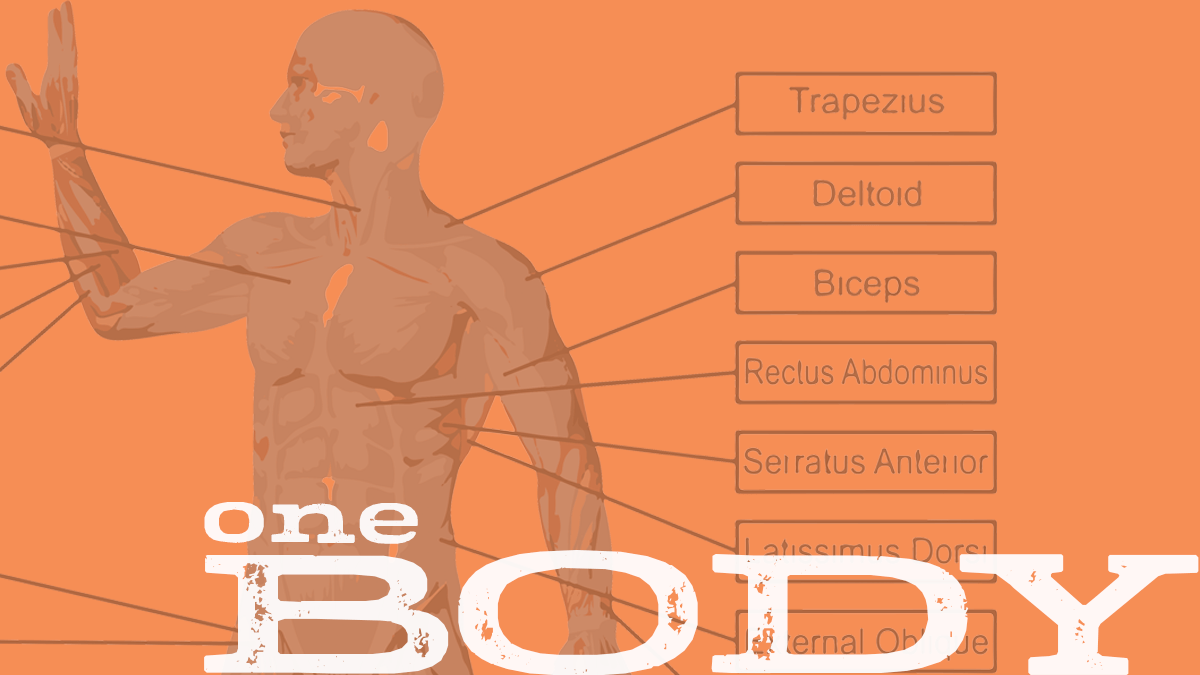
Which component will you remove? Will it be the steering wheel? Perhaps it will be the left front tire or the front seat or the two headlights. My illustration may seem ridiculous, but you get the point. Unless you have the complete car and have the ability to use all of its components, your ability to benefit from that car is going to be severely limited. The Bible says you and I are part of a larger Body – the Body of Christ. We each have our own body, but we are also made up of a larger Body that has a unique function to play. When you are not functioning as God intended, the entire Body suffers because you are not fulfilling your prescribed function.

When you function in a way that is not directly connected to the larger Body, you are only fulfilling a small portion of why the Manufacturer made you. There is a greater mission that you must fulfill. Today, the Body of Christ is fragmented and seeks to do things separated from one another. Our individual church “silos” stands alone – often as monuments to man instead of the greater mission of reaching our world.

Jesus knew the key to fulfilling His mission was getting His larger Body to work as one. “Neither pray I for these alone, but for them also which shall believe on me through their word; 21 That they all may be one; as thou, Father, art in me, and I in thee, that they also may be one in us: that the world may believe that thou hast sent me.”—John 17:20-21.

What is your part in the overall mission? Are you fulfilling your prescribed function as designed by the Manufacturer?

Block Logic

“For thus saith the LORD of hosts, the God of Israel; Houses and fields and vineyards shall be possessed again in this land.”—Jeremiah 32:15.

In the scriptures we discover a difference in the way the Hebrew mind viewed things compared to the way many Westerners relate to God. Hebrews used something called Block Logic. That is, concepts were expressed in self-contained units or blocks of thought. These blocks did not necessarily fit together in any obvious rational or harmonious pattern.

Greek logic, which has influenced the Western world, was different. The Greeks often used tightly contained step logic which reason a premise to a conclusion, each step linked tightly to the next in coherent, rational, logical fashion.

This is why some Bible stories don’t make sense to the western mind. It is particularly difficult for Westerners (those whose thought-patterns have been influenced more by the Greeks and Romans than by the Hebrews) to piece together the block logic of Scripture.

Consider Jeremiah and God’s instruction to purchase land in a seemingly inopportune time. If I asked you to purchase a specific land parcel when you knew that the country you were living in was about to be invaded and you were sure to be placed under arrest, how wise do you believe such an investment would be? Do you believe God would lead you to make such an investment? That is exactly what God told Jeremiah to do. However, God had a good reason for having Jeremiah make such a purchase. It was to be a testimony and a promise that God was going to restore the Jews to their land.

Hebrews made decisions based on obedience. Greeks (and Westerners) often made decisions on logic and reason. If the early church made decisions based on a pro and con method of decision-making, there would be no miracles in the Bible. i.e., such as getting the coin from the fish’s mouth, walking around the walls of Jericho to take the city, Peter walking on water, etc.

We are not to question God’s instructions. We are simply to obey.